The message nobody else can read
A student finds a note that appears blank to everyone else. Establish who is telling the story and reveal one detail that makes the narrator doubt their first explanation.
PROMPT GUIDES · 2026-10-07
A strong seventh-grade prompt asks for one extra layer beyond a basic response: a clear viewpoint, a logical connection between ideas, an opposing claim, or evidence from more than one source. Choose one writing move, draft with concrete details, then revise for cohesion and audience.
Create a seventh-grade writing task about [TOPIC]. Name the audience and purpose. Require one clear viewpoint or claim, logically ordered reasons or events, and specific evidence or details. If it is an argument, include and answer an alternate or opposing claim. If it is informative, use one organizing pattern such as comparison, classification, or cause and effect. End with a five-question revision checklist for cohesion, evidence, precision, audience, and conclusion. Do not write the student's response.
Try it in the prompt generator →
Topic alone does not set the level. The same topic can become a narrative about point of view, an argument that answers an opposing claim, an explanation organized by cause and effect, or a short research question that uses several sources. Pick the move first so the student knows what kind of thinking the draft must show.
A student finds a note that appears blank to everyone else. Establish who is telling the story and reveal one detail that makes the narrator doubt their first explanation.
Write a scene that covers only seven minutes. Slow down one decision with sensory detail, then speed up the final thirty seconds.
Two friends remember a promise differently. Use dialogue to reveal what each person wants without letting either character explain everything directly.
Describe a route the narrator knows well, then change the time, weather, or crowd. Use transitions to signal the shift and show how the viewpoint changes.
Tell about a real or imagined win that creates a new problem. End with a reflection that grows from the event instead of summarizing it.
Follow one object through three characters. Keep the event sequence logical while letting each handoff change what the object means.
Make a claim, give two reasons supported by evidence, acknowledge the strongest opposing concern, and answer it fairly.
Choose one use for an empty lot. Compare it with one realistic alternative and explain why your plan better serves the intended users.
Propose a limited rule instead of an all-or-nothing position. Connect each reason to evidence and address one likely objection.
Use available observations or data to choose one target. Explain the tradeoff and state what evidence would change your decision.
Argue for a shared title, student choice, or a mixed approach. Use specific benefits and answer the best case for another option.
Rank three community needs, defend the first priority, and explain why a lower-ranked need can wait without pretending it is unimportant.
Explain how one repeated habit affects a classroom, team, household, or habitat. Separate immediate effects from longer-term effects.
Compare two learning methods using the same criteria. Explain which conditions make each method useful instead of declaring one universal winner.
Create categories for local clouds, leaves, sounds, rocks, or public signs. Define each category and include one borderline case.
Teach a process you know. Name the step most likely to fail, why it fails, and how a reader can check the result.
Choose a term such as fair, reliable, private, or local. Compare two meanings and show how context changes which meaning fits.
Explain a teacher-provided chart or table. State the visible pattern, one limitation, and one question the visual cannot answer.
Compare two teacher-approved sources on one question. Check authorship, date, evidence, and purpose before explaining the disagreement.
Begin with one research question, summarize what several sources establish, then write a narrower question the evidence makes worth asking.
Use details from a shared text to explain two plausible interpretations of a character's choice, then defend the stronger reading.
Compare a fictional portrayal with a teacher-approved historical account. Explain one change and how it affects the reader's understanding.
Find a repeated claim in several sources. Identify whether they rely on the same original evidence and note what remains uncertain.
Compare two versions of your own paragraph. Explain which change most improved purpose or audience and what you would revise next.
| Move | Support version | Stretch version |
|---|---|---|
| Viewpoint | Name the narrator and what the narrator wants. | Let another character interpret the same event differently. |
| Cohesion | Plan three links: because, however, and therefore. | Vary transitions so relationships stay clear without sounding repetitive. |
| Opposing claim | State one fair reason someone may disagree. | Answer the strongest opposing reason without misrepresenting it. |
| Evidence | Use two teacher-provided details. | Compare several sources and explain which evidence is most credible. |
| Conclusion | Return to the claim or main idea. | Show what follows from the reasoning without introducing a new topic. |
Support narrows the number of decisions but leaves the writing to the student. Stretch adds a relationship to manage: another viewpoint, a tradeoff, a source judgment, or a deliberate shift in pacing.
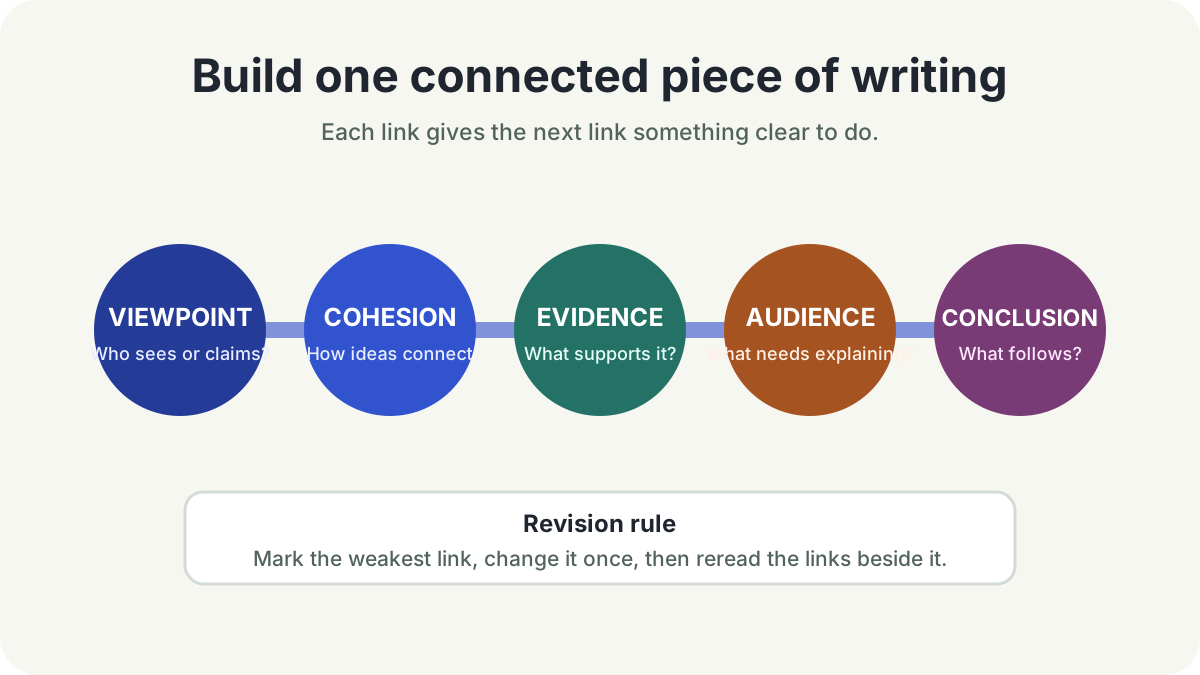
Revise one target at a time. First mark the sentence or paragraph where the target breaks down. Then make one change and reread the surrounding section. Changing every sentence at once makes it hard to tell which revision improved the draft.
The times are an author-designed practice routine, not a required testing schedule. Extend research and source checking when the task depends on outside evidence.
It should ask for a clear viewpoint or claim, logical relationships among ideas, relevant evidence or details, and revision for purpose and audience. Argument tasks can add an alternate or opposing claim.
The grade 7 set adds viewpoint, cohesion, opposing claims, source credibility, and more deliberate organization. The difference is the writing move required, not simply a harder topic.
No. Narrative and reflection prompts can use experience or imagination. A research prompt should provide time and access to several suitable sources and should make source checking part of the task.
Yes. Keep the required writing move, add the actual audience and constraints, and tell the tool to create instructions or a planning scaffold rather than writing the student's final response.
Grade-level moves are informed by the Common Core State Standards Initiative Grade 7 Writing standards. The prompts, support and stretch variants, checklist, routine, and diagram are original PromptSprite editorial material; this is not an official curriculum or assessment.