The rule that stopped working
A familiar school rule stops working for one day. Show the first sign, the failed solution, and the moment order returns.
GRADE 6 WRITING PROMPTS 路 2026-10-06
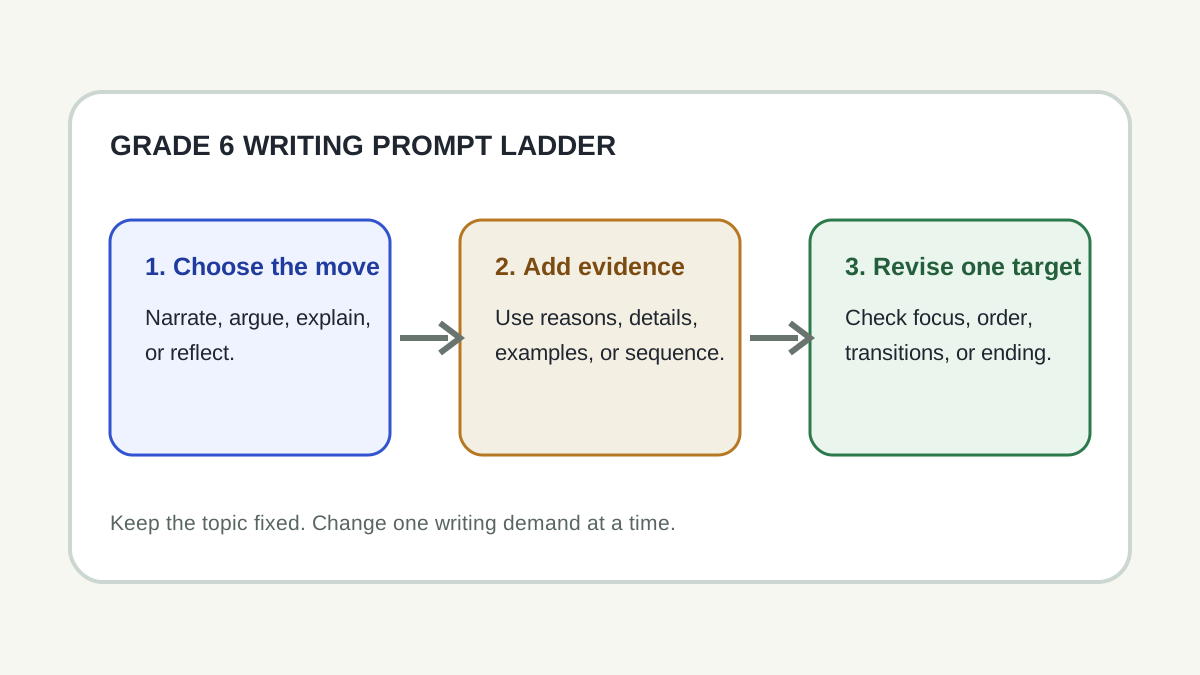
A useful sixth-grade prompt names one clear writing move, gives enough context to begin, and leaves the student room to make choices. Start with narrative, argument, informative, or reflection, then revise one target: focus, order, evidence, transitions, or ending.
A familiar school rule stops working for one day. Show the first sign, the failed solution, and the moment order returns.
A map shows a room that is not in the building. Tell the search from the viewpoint of the student who believes the map.
Two friends read the same short message differently. Use dialogue to reveal the misunderstanding before either friend explains it.
A character has seven minutes to fix a small mistake before it becomes public. Slow down the most important moment.
An ordinary object suddenly matters to everyone in town. Use sensory details before explaining why it matters.
The least experienced person in a group solves the problem. End by showing how the group changes afterward.
Which practical class should every middle school student take? Make one claim and support it with two relevant reasons.
Should the school day begin later if dismissal also moves later? Explain one benefit and one cost before defending your position.
Should schools offer a quiet place during lunch? Use a realistic example and answer one concern about supervision or space.
Should students choose between two homework formats that test the same skill? State the rule you would use and why it is fair.
A town can fund either a small park upgrade or longer library hours. Choose one and identify the evidence you would need.
Should one school event be phone-free? Define the event, make your claim, and address the strongest objection.
Explain a skill you know well so a beginner can follow it. Organize the steps and define one term the reader may not know.
Explain how one tool or technology changed a daily habit. Use cause and effect instead of a list of facts.
Explain two ways to reduce wasted food at school. Compare cost, effort, and likely impact without choosing a winner too early.
Follow drinking water, electricity, recycling, or a library book through a local system from start to finish.
Choose something people often misunderstand. State the mistaken idea, give accurate details, and explain why the mix-up happens.
Ask a focused question about an animal, invention, or place. Use two sources and record which fact came from each source.
Describe a time new information changed your opinion. Explain what you believed before and what evidence mattered.
Write about a mistake that revealed a better method. Separate what happened from what you learned.
Describe a helpful action that most people did not notice. Explain why it still mattered.
Describe a choice between two reasonable options. Show the value you used to decide.
Choose a rule you once disliked. Explain whether your view changed after understanding its purpose.
Identify one part of your routine that improved through practice. Name the change you could observe.
| Version | Change one demand | Example for the quiet lunch argument |
|---|---|---|
| Support | Provide a four-part frame | My claim is鈥?One reason is鈥?An example is鈥?Therefore鈥?/td> |
| Grade-ready | Ask for a claim, two reasons, and relevant evidence | Defend or reject a quiet lunch space using two reasons and one realistic example. |
| Stretch | Add one objection and response | Answer the strongest concern about space, fairness, or supervision. |
Revise one question at a time. Changing all five at once makes it hard to see which edit improved the draft.
It should make the task, purpose, and audience clear while leaving room for the student to choose details and develop ideas. The expected move can be a logical event sequence, a supported claim, an organized explanation, or a focused reflection.
Two or three choices are usually enough for a short writing round. Too many options can turn selection into the main task.
Keep the topic and reduce decisions. Offer a four-part frame, a short list of details to choose from, or a first sentence that names the claim or situation.
No. Short narrative and reflection tasks can use experience or imagination. For research practice, use a focused question, more than one source, and a simple record of where each fact came from.
The writing moves and revision checks are informed by the Common Core State Standards Initiative's Grade 6 Writing standards, which cover argument, informative writing, narrative, production, research, and routine writing. The prompts, support and stretch versions, diagram, and timed routine are original PromptSprite editorial material. They are not an official assessment or curriculum.